


Originally published at The Beat on May 28th, 2014. It is being reposted here with small adjustments for clarity, and archival purposes.
There’s very little chance you came to The Beat, clicked on this article about comic book retail, and do not have a working knowledge of recent comic book history. That said, it never hurts to add a little context to current events. So.
In September of 2011, DC Comics relaunched their superhero universe with fifty-two brand new ongoing series functioning in a bright new continuity. Since then, the company has used September as a large-scale event month, using 2012 to flashback to the unexplored “early days” of the new continuity, and 2013 to unleash their villains across each and every one of their titles.
Conceptually, there’s nothing wrong with this. The comic book industry thrives off of the occasional event as the eyeballs gained from the news of a line-wide disruption usually translates to higher profits. It was the reason why DC’s line-wide relaunch in 2011 was shatteringly successful for that month (and several after), and why their flashback month in 2012 garnered a slight bump in sales, despite a comparatively low-profile concept and easier execution.
Based on those two specific data points, it’s easy to see why DC thought “bigger” and “more complicated” would be the preferred road to take for their future events. Sales increased along with the size of the circus they brought with them, and so for their Villain’s Month, they brought one of the largest sideshows they could muster.
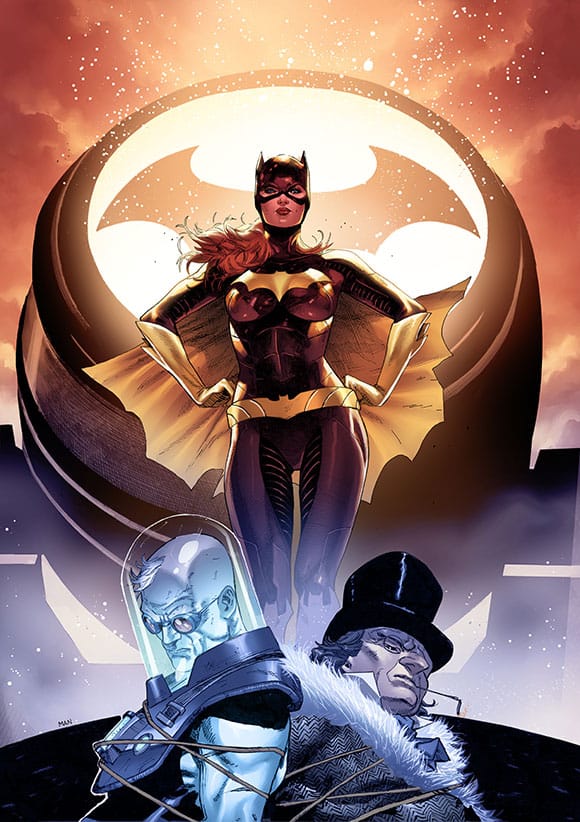
Building from the simple touchpoint of “a villain for every title”, DC set about constructing a complicated structure of moving images and complicated numbering. Each and every title would have a lenticular cover that featured moving “3-D” images so entice the eye. This would balloon the cost of each month book from the more typical $2.99 to $3.99 for the month across the line, increasing the bottom line for retailers. Simple enough to start, right?
The first real complication came in the form of DC’s intricate publishing schedule and numbering strategy. Because the books wouldn’t necessarily further an ongoing’s overall plot, the company decided to employ the sub-numbering system Marvel had been toying with, changing what would be Action Comics #24 into Action Comics #23.1.
In theory, I have no problem with this strategy – when employed properly, and used by retailers correctly, sub-numbering can have benefits for all involved. In this case, it tells the reader that these books are something else. If needed, they could be skipped if a person was on a budget and just wanted "a story". Additionally, it makes the event easily identifiable for those who want "everything". Clarity on both ends generally means no one gets burned - and that's great for long term sales.
Of course, DC did not want these comics to seem “skippable”, so they did everything in their power to make them “must-haves”. Their main ploy took the form of their lenticular cover design, where the image changes as you move the comic. Their other failsafe was a publishing schedule that saw their lower selling books wiped from the schedule to make room for multiple shipments of their larger books.
In the early days of dealing with this event, this was the biggest problem. Books like Dial H and Katana were given strange She’s All That make-overs and disguised as Justice League titles, while certain titles (like All-Star Western) were moved from the schedule completely. This created a complicated landscape where retailers had try to discern how to add certain books to files without causing too much of a disruption. The headache was enormous.
For my part, I attempted to let everyone know what was happening to the best of my abilities. I came at customers with a list of books and recommendations, asking all comers to choose one of three options:
- Pick which specific books they wanted themselves (so that, say, a hardcore Justice League fan could skip on the Dial H issue of the title, which might have been well outside of their areas of interest).
- Allow me to choose for them (so that Batgirl and Catwoman files would get those issues of Batman: The Dark Knight that would affect the ongoing stories from those titles), or...
- Skip the event completely.
It was a lot of hard work, but in the end, it was almost worth it. Had DC stuck to their guns and honoured all orders placed before the final ordering deadline, the whole event would have gone smoothly, even if it had required a lot of extra work to do so.
Then came the allocations.
As the story goes, DC didn’t anticipate the demand that the lenticular covers would garner, and had printed far too few. Recently, the company also admitted that a chunk of the books had to be destroyed due to some fuzzy imagery that had resulted during the early stages of production cycle, limiting supply even further. In any case, retailers were eventually told that their orders for the 3D covers were going to be highly allocated, and as a result the company would be producing a line of 2D covers to match at the $2.99 price point in order to meet demand.
There were several problems with this, starting with the fact that the company waited to make that announcement the week after final orders were placed for the first week of the event. To make matters worse, DC didn’t announce allocation amounts until three days before they wanted final orders for the 2D covers they were using to “cover” what would amount to intense product shortages. For me, that meant I had three days to try and contact each and every one of my customers, and try to explain the changes that were going to happen. Suddenly, I was forced to tell people that I had lied to them about there only being a premium $3.99 edition available, many of whom had previously sworn off the month of publication to save money on their already strained budgets. In many cases, I had to essentially barter with people who expected a complete run of lenticular covers because DC had decided to allocated books like the aforementioned Dial H issue of Justice League using a store’s orders for Dial H. This meant a book that was selling an estimated 11,086 copies industry wide in August 2013 was used to allocate orders for a title that sold an estimated 103,936 for the same month. That was almost a 90% difference in sales, and the allocation for most stores reflected that, creating a huge gap between what could be put into the hands of customers.
To their credit, DC made the entirety of the event returnable in order to take the bulk of the financial strain away from the retailers (though as a Canadian retailer, the returns process is financially questionable at the best of times), but there was never a question about the event’s financial success. With a line-up consisting of multiple issues of their highest selling titles at higher price point, the money was always going to come in. On the other hand, the amount of heavy lifting a retailer had to do to frantically adjust numbers at the very last second and satisfy customer demand far outweighed the price benefits… if you were the type of retailer who sold the books at cover price. Many didn’t but that’s another topic completely.
The result was a catastrophic mess that I will never forget, resulting in over a month of stress dreams involving missing product and irate customers. While nothing in reality quite approached the level of anger and despair I felt in those dreams - and while the store had fantastic sales for the month - it wasn’t worth the strain and effort, especially when the collector mentality it garnered did nothing positive to our bottom line moving forward.
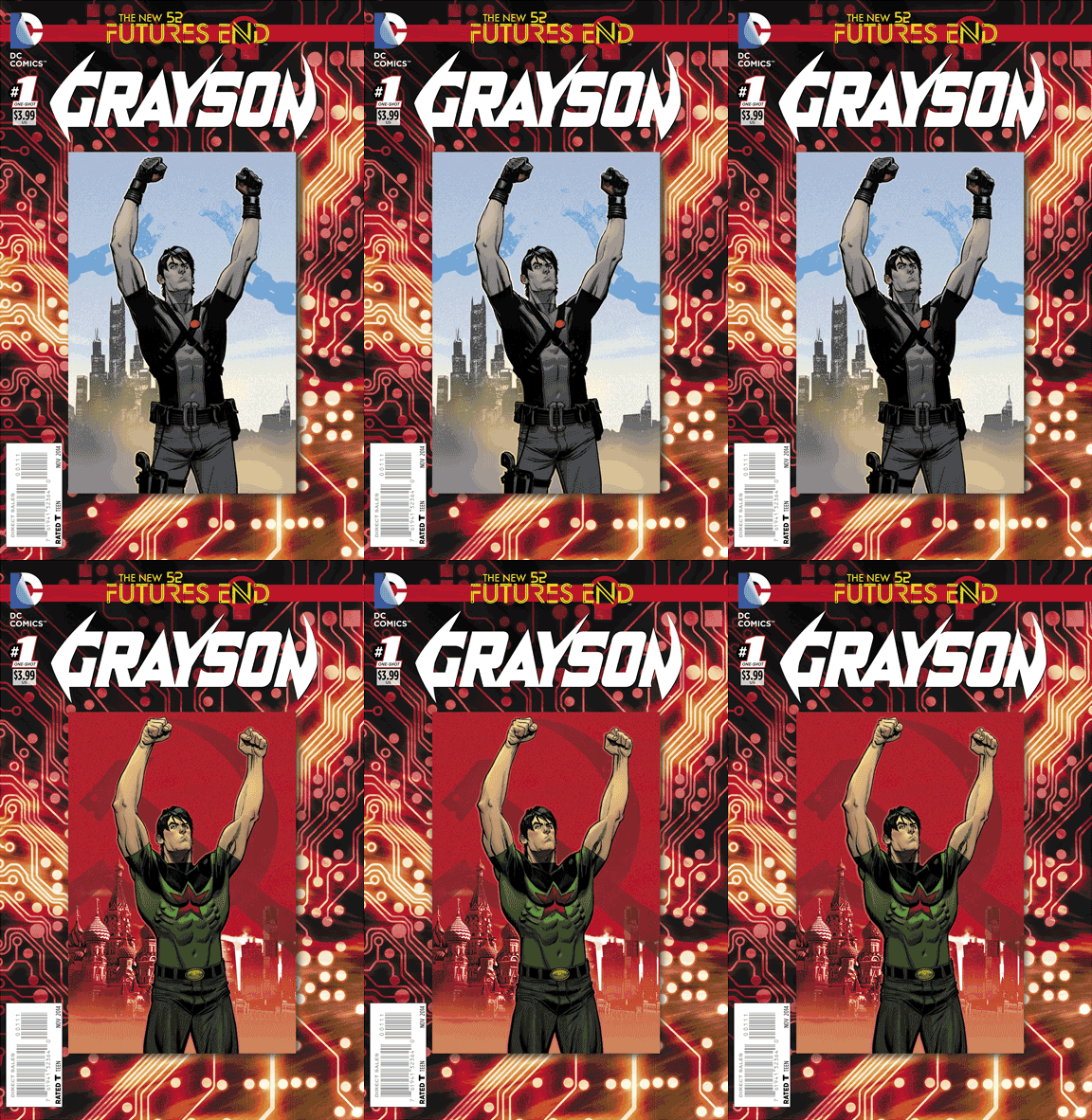
Flash forward several months to February 27th, 2014. I was working at the shop I manage and felt a darkness suddenly overtake me. I didn't realize that DC was at a ComicsPRO retailer summit announcing a new round of lenticular covers for this September, causing radiating waves of crippling despair hit me in the frigid norths of Canada.
Okay, I might be exaggerating, but that is the closest approximation I can make in regards to my feelings about that announcement – something dark gripping my heart immediately and violently, crying out to be empathized with, before dissipating into something that resembled… weary acceptance.
Of course DC was going to try again – only this time, they were going to try to “fix” some of the problems they had with the first round. It started with soliciting the line well before the typical time frame, requiring retailers to set numbers for the September shipping titles alongside ones that would find their way to the stands in July. As with the previous event cycle, this in and of itself was fine. Even enforcing a strict Final Order date of May 29th was workable, given the popularity of the lenticular covers, and the need to get those orders locked in early. However, in solving one problem, DC opened a door to another set of troubles that are somehow far more distressing than those that marred the previous year’s events.
As they announced the slate of 41 books that would be getting the lenticular treatment, the company also listed the plots for each of the titles. Beyond that, there was no information. No creators, no covers, nothing, just raw data of the shape of events to come.
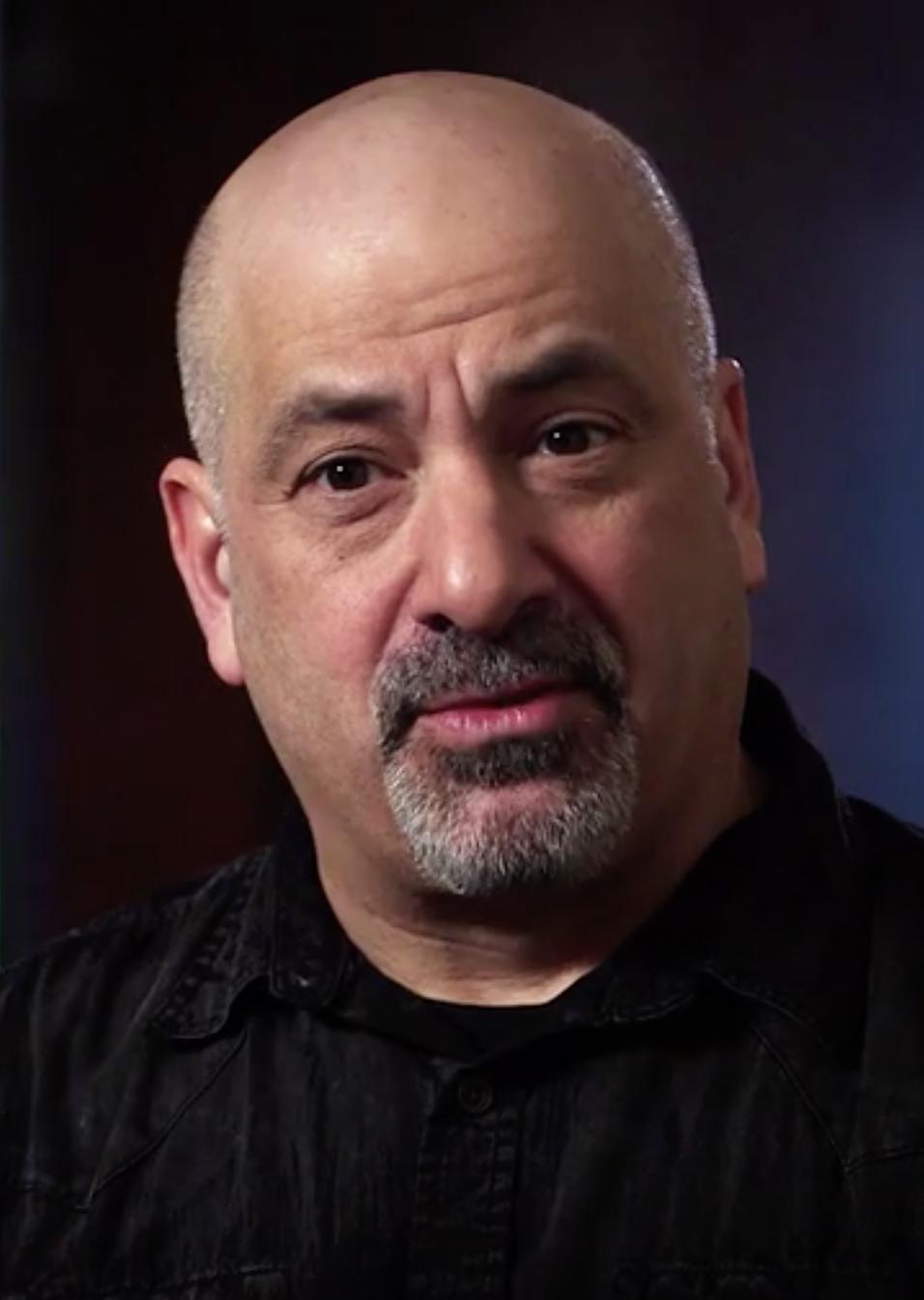
While the event structure always implied that the circus was more important than the performers, it had yet to be alluded to so overtly. It opened a pit in my stomach that only widened when DC head honcho Dan Didio told attendees at a Diamond retailer summit that only half the creative teams for the line’s books were confirmed. This was in April.
Most companies don’t publish books out of the goodness of their heart, and a good retailer knows that. It’s the reason why any given Batman title will move a certain amount of copies on a consistent basis, and a title like All Star Western lingers near the bottom of the charts trying to stave off cancellation with each passing month. We have a general sense of what will sell and how it will sell, despite a title’s inherent quality, and we order to match demand. That’s business.
That said, if you’re running your store or comic publishing concern properly, there can and should be room for art inside of it. Without the art of comics, there would be no business, and without business, there would be no art. It’s a cyclical pattern that requires both to survive. In crafting this new event, however, DC decided to lean so heavy on the business aspect, that the art became an after-thought.
The history of this industry is rife with people who have chosen the quick dollar over the long game. By and large, the peak is usually pretty tall, but the low is ruinous, as evidenced by the big crash in the 90s. The way DC concocted this year’s event, coupled with last year’s clear lack of preparation and forethought, smacks of a company seeking the dollar at the detriment of anything else. While the company has since released the names of the creative teams attached to each of the 41 September shipping titles, the lingering after effects remain. Forgetting for a second about the lazy retailers who will order blind based off the initial dabs of information contained within their copy of Previews (which only featured the plot information), there remains the issue of content, and what it means to the larger market.
While the line will undoubtedly post numbers that will eclipse DC’s usual month-to-month orders, it will all be in the name of the event and the lingering effects of their previous round of special covers. Armed with a sense of foreboding and vowing to account for every dollar they potentially lost from a lack of product last year, retailers will undoubtedly order deep on each and every one of the offered 3D covers. With an unencumbered supply, DC will happily reap the benefits of this ordering practice, as they make their dollars when they sell their product to retailers, and not when retailer sell product to their customers. After the books are in retailers’ hands and the cheques are cashed, DC could probably care less about sell-through, as the majority of the product they sell is non-returnable. There will be a glut of product on the stands – but what about the contents of the books?
This is where the balance of art and business come into play. Batman will sell enough to keep the lights on almost regardless of what is found within the pages of its covers, but there is a correlation between perceived quality and sales. One look at where all the different Bat-books are selling will tell you that with ease. Now, when you take those numbers and start looking at attrition from month to month, you can see the effect that contents will eventually have on the line as a whole. If the contents are sparking something inside a readership, the numbers will remain fairly level or increase. If not, they will drift downwards with stunning velocity.
The nature of this year’s event being an after-thought beyond moving numbers is stunning in its short-sightedness. There is a severe lack of art at play within the business model, and it will eventually cause a collapse which will be all the more devastating for those retailers and companies who have been counting on the quick dollar that suddenly no longer exists. I believe that the effects of this are already in play from last year’s event. While I sold through copies of the 3D covers with ease to speculators and collectors, a large swath of my regulars found the stories contained within the Villain’s Month issues to ill-suit their personal likes. It was a feeling compounded by the large buy in the event required, and the darkening of the already uniformly dreary line of comics the company currently publishes. Add to the mix a weekly series that leads into this year's new event, and I have a customer base that is approaching “apathetic”.
I can work with angry. I can’t work with apathy.
A solution to this would be for me to cinch up and work a little bit harder. I could always pound the pavement and find more of the crowd that the current line of DC comics will appeal to. That is, after all, my job as a retailer – to match people with comics that they’ll love – but to do that, I need DC to meet me halfway. I need them to let me know that I’m finding customers for books that they are proud of, with contents that they have put time and effort into.
What we heard from Dan Didio in April was the vocal equivalent to that shrugging emoticon that’s been doing the rounds on the internet lately. DC wants their quick dollar, and they’re willing to do anything to get it, including burning down the road forward. Eventually, they’re going to see diminishing returns from this tactic, and when they do, the results will be far more catastrophic than they would have been had they put their focus on the content of their books, and the ideas of their creators.
Let’s all just hope they can do this before they take some of us down with them.


Member discussion