


Here in the city, there was a man I called “Uncle Frank”.
I met him just a few months after I opened my shop. He walked in with a bottle of wine he had purchased to drink with his wife over dinner - a trip he admitted to making quite often.
After a few pleasantries and a bit of chatting, Uncle Frank asked if we’d be interested in purchasing some comics he had.
“They’re leftover from when I used to run a comic shop myself,” he said, “They’ve been in my basement for decades, and I was wondering if you had the time to look at them?”
We exchanged information, and later in the week, I was in the basement of Uncle Frank’s sprawling house. It was filled with all kinds of knickknacks collected over a long life. The comics were buried among other treasures that we dug through, including boxes of different songs he’d co-written (which a search through the internet proved to be true). Uncle Frank casually talked about his music career and wandered through a few stories that I can’t confirm in the slightest. At one point, we came across a gold record. He treated this like everything else he came across, with a clear fondness that he floated past, never stopping to elaborate because he was already onto the next thing he remembered.
After a while, we finally felt like we uncovered every box that had comics in them. While I slowly went through the boxes, Uncle Frank told me about how he used to run his comic shop in the 70s.
Originally, he dealt in selling metaphysical books, but figured there would be a market in single issues. He said he approached a local magazine distributor and worked out a deal with them. He’d go to their building every week when the comics would come in, and he’d nab the comics and quantities he was interested in carrying. Uncle Frank claimed that this system worked for quite some time. Folks began to realize he could get specific comics in with regularity, and the magazine company didn’t seem to mind the increase in volume they were moving. Things were good… until they weren’t.
According to Uncle Frank, he showed up to pick comics one week, and the magazine distributor told him the deal they had was off due to it “messing with their system”. He asked if he could nab this week’s books as a capper to their previous agreement, and they obliged. While he was happy he was able to get one last “shipment”, he was upset that he’d have to disappoint his customers soon.
“So I picked up the phone and I phoned DC,” Uncle Frank told me, “And when I got ahold of them, and I told them my situation, they were mad, they said ‘fuck them’. They have me talking to this guy, he says he’s Carmine Infantino, and-”
“I’m sorry,” I interrupted, my hands stopping their gentle stroll through dusty books, “Carmine Infantino?”
Uncle Frank regarded the name with the same casual fondness as the gold record. He did this a lot, dropping something wild but only because his brain had produced the tidbit. The man didn’t seem to have an ego about any of his life, just a calm sense of contentment.
“Yeah, and he makes me a deal, to let me distribute their comics, over the phone,” Uncle Frank said plainly, “And so I figured if that worked, I better phone Marvel and get those too.”
He relayed this information, sitting in a big, comfortable chair as I dug through long boxes. I would occasionally come across many key books in this collection and point them out to him.
“Oh wow, Giant Size X-Men #1,” I would say, “This one is worth a bit of money.”
Each time, Uncle Frank would wrinkle his brow, repeat the name of the comic, and then relay memories of the business surround that book, such as, “People seemed to like that one. I remember trying to get more of that one when I could because they liked it.”
Then he would take a small pause and, with no hint of playfulness or irony, guess at the price.
“Figure that’s worth… $250 maybe?”
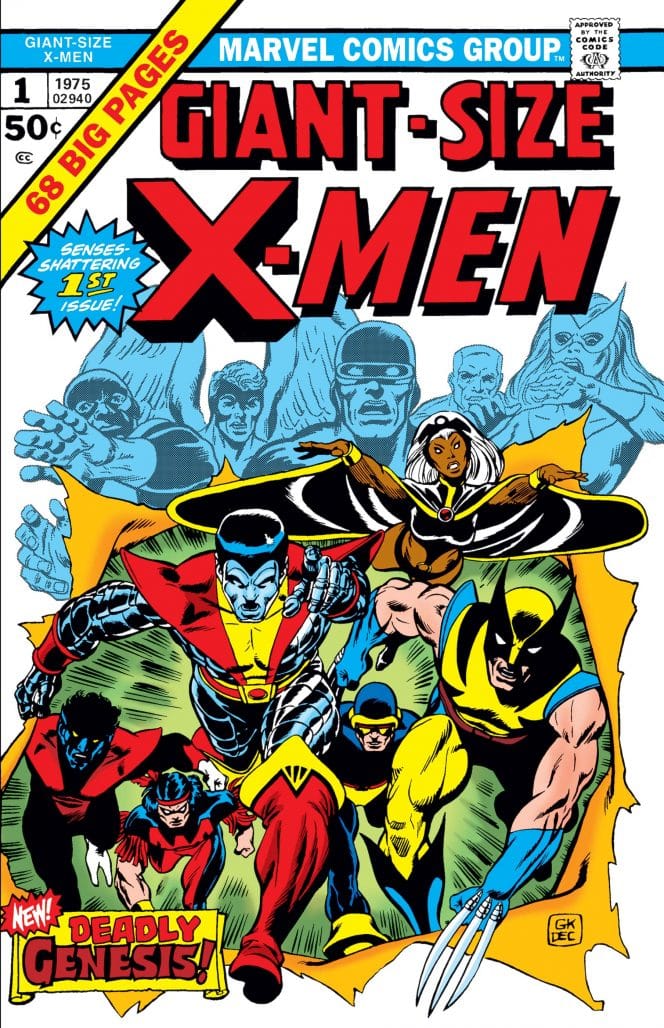
After the third or fourth book like this, I told Uncle Frank that we’d be selling his collection on consignment instead of buying it outright. At the prices he was guessing, we could have made a lot of extra money, with him being none-the-wiser. Instead, I decided to learn. I listened to Uncle Frank talk about how he got started distributing single issues to all kinds of stores in Edmonton, in addition to his own store - a pioneer in what would be called the direct market.
As we hit boxes of underground comics, he spoke about how he would wander the city and offer the books to all kinds places - head shops, used book stores, music merchants, and metaphysical spaces - and add them as a client to his burgeoning distribution company. I marveled at the sheer volume of underground stuff that I was flipping through. At that point in my life I had been working in comic shops for about 9 years, and I had rarely seen underground comics. Uncle Frank had boxes of them.
Eventually I finished going through all the boxes, and I asked Frank if he was comfortable with me taking the long boxes to the shop to process them and sell. I asked him if he wanted an agreement written down. He did not.
“You seem okay,” he said, “And that’s good enough for me.”
It took two trips to load the comics into my car, carrying boxes up several flights of stairs and through the front of the house. Frank would tell me about his wife and his family when I needed to stop for a few moments.
When I finished the last load and got ready to leave, he stopped me.
“Hold on,” he said, “That was a lot of work.”
He opened one of the kitchen cupboards and produced an incredibly large bag of roasted nuts that he and his wife had seasoned and roasted themselves. He filled a small sandwich bag and handed it to me.
“You need to eat,” he insisted.
I took the bag and left, filled to the brim with stories that… I couldn’t even begin to confirm, but just felt true in my guts. Stories about a history that has always fascinated me, but I had only been able to scratch the surface of in my time behind the counter.
The comic book industry was always a passion of mine, but there was something about Uncle Frank’s strange, breezy way of describing how he cobbled together comic distribution in Edmonton that had me craving more. I spent the next few years trying to dive into the history of the industry and the direct market specifically.
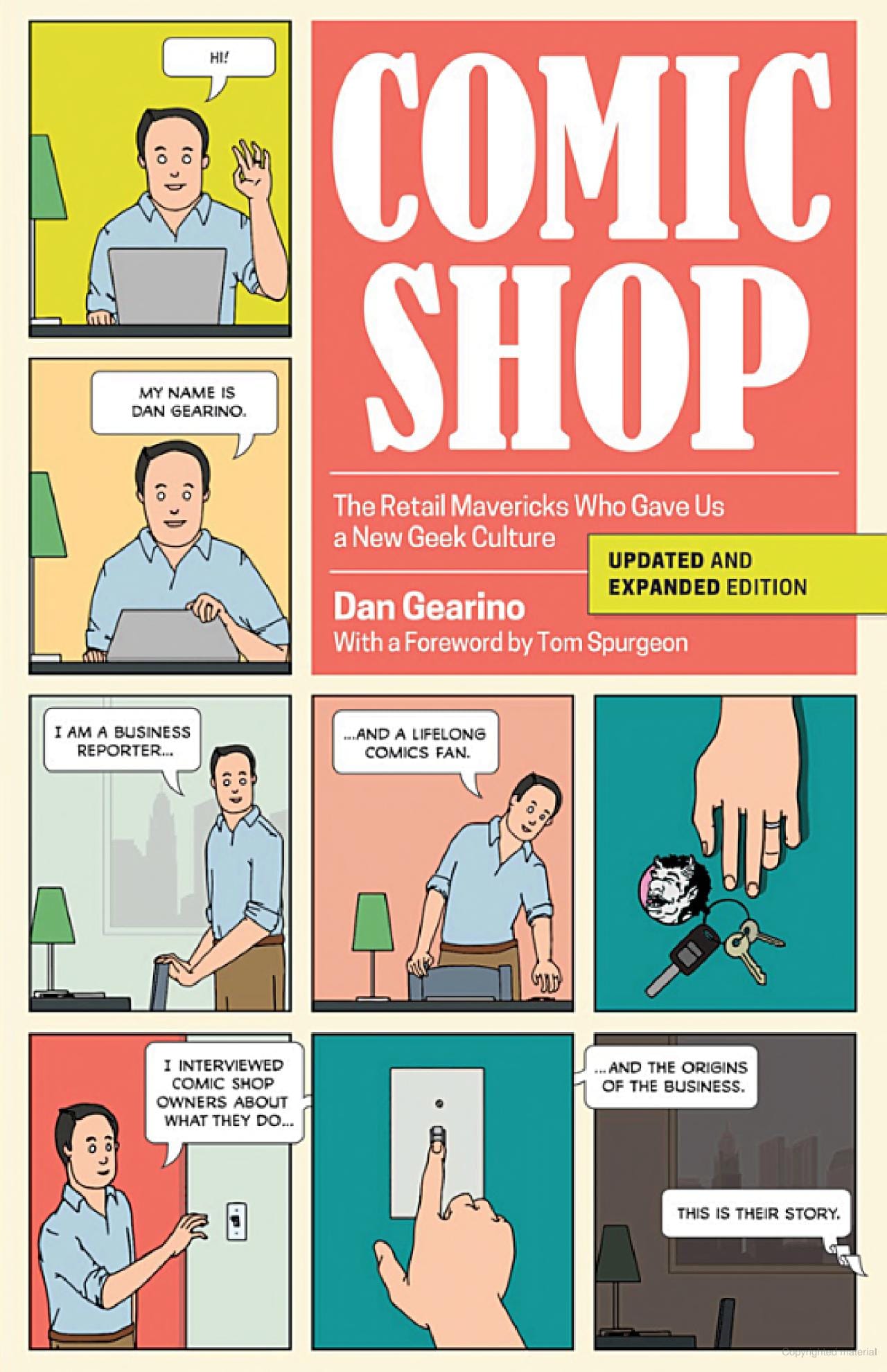
Through the years, I’ve amassed quite the archive of comic industry non-fiction, ranging from histories of specific companies to the nitty gritty of comic retail and everywhere in between. I devoured books like Comic Shop by Dan Gearino, where I learned about Robert Bell and Phil Seuling. I read about literal children pooling their money together or borrowing from their parents to run small comic shops and the weird, nebulous handshake deals that led to the first direct market distributors emerging. There was also a tale where a young Bill Schanes was approached by a distributor rep who started a meeting by opening up a briefcase that had a bottle of whiskey, a couple of shot glasses, and a gun. Schanes, who was in high school at the time of this meeting, refused the whiskey. He started his shop when he was 13 with his brother, who was 17.
He would go on to be the Vice President for Purchasing for Diamond.
The stories of the direct market are wide and varied. You have the wild formation where folks like Uncle Frank and Seuling and others cobbled together a system, wrangling many actual children in order to start direct distribution. You have the refinement of that system, which evolved to do away with much of the “direct” aspect as the business grew. You had many distributors melt away until there was one, and then you had the splintering when COVID-19 hit.
All through this, good work was done. Good work, by good people, all trying to do their very best. Over the next few months and years, I hope to celebrate many aspects of the direct market, and how it helped the comic industry run for years. I'll be talking about people like Uncle Frank who built something from love, and might have saved the medium from obscurity. I'll be talking about structures and publishers that came and went.
Today, however, is not that day. Today, we don't come to celebrate the direct market, but to bury it.
Hey folks. My name is Brandon Schatz. I'm a Joe Shuster Award winning comic shop owner (Best in Canada for 2019), an Eisner nominated comics journalist (for this very publication), and according to many in the industry, I have some fucking nerve.
All of these things are true.
About six years ago, I started writing about how the pandemic had shattered the direct market, and that we needed to build a better system. Some folks listened, and others chose to keep operating as though nothing would ever take the system down.
Then in early 2025, Diamond Comics - the last standing distributor from the direct market era - announced their bankruptcy. There has been some form of madness happening ever since.
Now, more than ever, we need something new. Now, more than ever, we need to learn from our past, and look forward to the future.
Welcome to The Indirect Market.
Back Matter.
Roughly ten years ago, I posted one of my industry articles to Facebook. An old school retailer commented on it dismissively and said, “come back when you’ve had 20 years in the business”.
Well, this month, I’m celebrating that very milestone. 20 year in the biz. As of next year, I will have been slinging comics for half of my life.
With that milestone in hand, I figured it was high time I got back to writing. So here we are.
A shout out to folks who have come here from my old Substack.
Over the past few months, I have been setting up The Indirect Market here because of Substack’s “hands off” approach to platforming hate speech for profit. This will be the new home for my writing, so please pop your e-mail down below to keep getting updates.
Articles over at Substack will start to disappear, leaving behind directions to this site in their wake. Some of those articles will be reposted "as-is" with back dating to keep the history, while others will be modified and updated.
Regular content will begin on Wednesday, October 14th, with a few treats posted in between.
Meanwhile...
ONE | The Warner Brothers Discovery / Paramount merger is crawling ever forward, and the comic industry is keeping a tight eye on how this will be effecting DC Comics (who was part of the WBD end of things).
Heidi MacDonald and The Beat are on top of some of the recent changes, including the fact that current DC Studio heads James Gunn and Peter Safran are safe... for now.
TWO | A large piece of Marvel's 2027 was revealed in Avengers: Armageddon #4 a few weeks back, and writer Chip Zdarksy and David Harper from SKTCHD lay it all out on the table, soup to nuts.
The video is embedded below, or if you subscribe to SKTCHD, you can get a transcript of the whole thing here.
Member discussion