


I started working in comic shops 20 years ago.
After turning 21, I was looking for a change. I had created a bit of an emotional mess for myself, and didn’t have the tools to properly deal with it all - so I ran. I moved from Central Alberta to Edmonton, rooming with my younger sister who started attending a fancy dancing school. She had needed a roommate, and I needed to disappear. So I did.
I transferred my job working at a national bookstore chain from Red Deer to a location just a short walk away from where I landed. It was a part time job, so if I was going to have any hope of making the move stick, I was going to have to find a second job to pay my share of food and rent. In typical fashion for my 20-year-old self, I put this off until after I found a place to get my comics.
My bookshop co-workers were kind enough to direct me to a few of the nearby shops. I decided to land at a place called Wizard’s Comics because it was the only place where people greeted me when I walked through the door. That was a thing I have never experienced before as a fresh face, in any other comic shop. When I returned later that week with my pull list, they were putting a “help wanted” sign in a window. I immediately went home and updated my resumé and returned just a couple hours later.

I didn’t hear anything about my application for two weeks. I would pop in the store on Wednesday, nervous as hell, somewhat expecting to see someone else they had hired. The owner would ring me through each time and ask me a questions about what I thought about the new books. On the third Wednesday, he asked me if I would like a job.
I was thrilled.
Wednesday and Saturdays were my days at Wizard’s, and while I loved having the job, I was terrified of losing it immediately.
Up through my mid-twenties, I was painfully shy and eager to please. The store owner thought this was hilarious. He was the prankster type who would let you twist in the wind before letting you back on the ground.
During my second week, I dropped a statue and it broke. It had been one of those stupid statues that had a base that wasn’t attached to the main statue at all - just something for the main statue to sit upon. I had been put on dusting duty and picked up the statue to clean the shelf, and the thing slid and smashed on the ground.
I was mortified.
The owner came at me yelling “what the hell!” I was sure he was going to fire me. I babbled a long apology that probably didn’t make sense, and he let me go for quite some time before a smile broke across his face.
He clapped a hand on my shoulder, and said, “Hey, I’m not being serious. This happens all the time, don’t worry about it.” He proceeded to tell me that a bunch of other statues had met a similar fate by his hand. I was relieved - but also more terrified at losing that job than ever before.
Working in a comic shop had been a dream of mine. When I was a kid, I used to wait forever for my dial-up internet to tell me about the new comics that were coming out. Most of these books I would never get my hands on as I wasn’t old enough to drive myself, and my family rarely agreed to take me to the local comic shop. Everything changed once I turned 16 and could get to the store by myself.
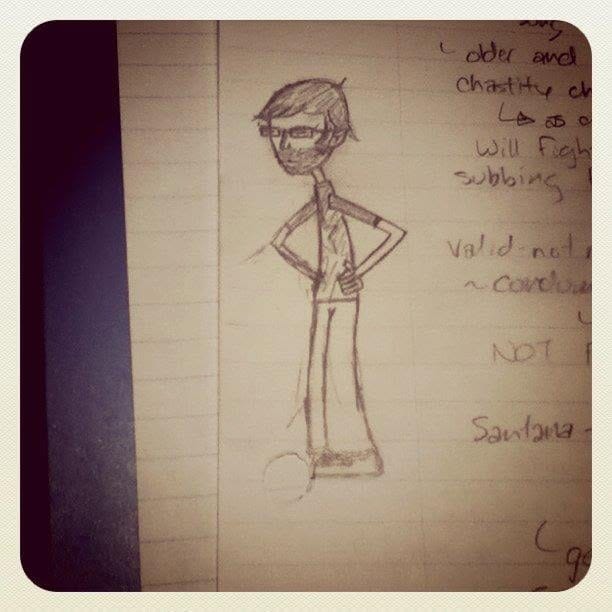
I was the kind of customer retailers dream about: I dug through sites to get info, sent my orders in early, and took the time to browse the shelves for anything I might have missed in the past. I wasn’t happy with the things I discovered on my own - I wanted more, and was easily swayed by a recommendation. I wanted to experience and know everything about the medium that I loved.
Getting the job at Wizard’s felt like something tangible after floating adrift after high school. College had proven to be a terrible fit for my brain, and helped dose me with my first bout of depression - though I wouldn’t recognize that until long, long afterward. My personal life was as messy as a shy 19-20 year old could muster (which was high stakes at the time, but small beans in the grand scheme of things). Then suddenly, after the move, things seemed to be falling into place. I was attached to a thing that I was passionate about, and I didn’t want to lose that. The store owner continued to do his little pranks, preying on my skittishness. Each time, I entered a state of mild panic.
This translated into my relationship with a lot of the customers. I was quiet and nervous for the first whole year of working there. I let the manager do most of the talking. He was kind to me, and was always down to chat about new books and recommendations. I worked with him on Saturdays, and someone complete different on Saturdays. This other person was a huge grump, and didn’t talk to me much. I always thought he was mad at me. I would later learn that it was more of a demeanour thing than anything else - but he certainly didn’t help with my comfort level working in that shop.
I had no doubt that I knew my stuff, but I was always terrified to say anything. I didn’t want to have the wrong opinion. I didn’t want to do the wrong thing. I didn’t want to have this thing that I dreamed of for so long to slip through my fingers for any reason whatsoever.
Enter: Civil War #7.
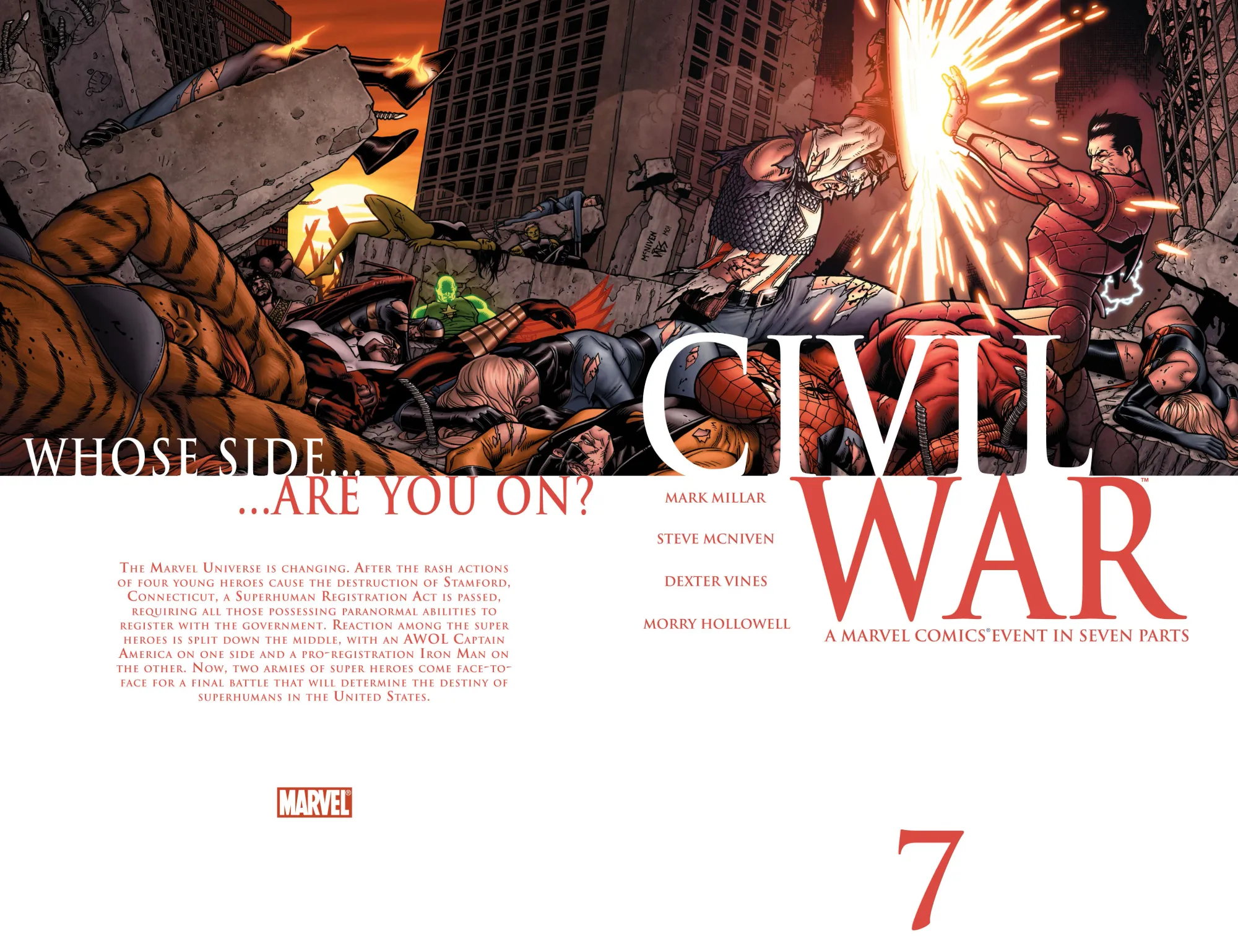
Civil War #7 was the first comic that taught me how to think like a retailer.
The series had kicked off molten hot. This was pretty standard for crossovers at the time - kicking off with a banger that got people talking. I remember forums generating long threads on each issue, dissecting the good and the bad. I remember sales charts showing huge interest from readers. And I remember the absolute rejection of the ending by nearly everyone who were buying it in the shop.
Folks were let down, and weren’t afraid to voice their opinion. Captain America gave up after being tackled by a bunch of regular randos? This wasn’t the climatic finalé people wanted. The muttering in the shop seemed to settle around “why did we bother?”
As a baby retailer, I tried to go with the flow. I had been underwhelmed by the ending as well, but I was intrigued by what was supposedly coming next - a Marvel universe where the heroes were divided. There was something intriguing there, even if the ending had been lacking. That had to be something. Right?
I also started thinking about how my job was to make sure we sold the comics that were already on order.
Wouldn’t it be problematic if folks were focusing on what didn’t work, instead of what was coming out next? And if they didn’t want to buy the upcoming line… would I end up getting laid off?
This was a tipping point for me. I knew I had to do something. The owner wasn’t happy with the ending and was crapping on it every chance that he got. The manager clowned on the story with his pals. The other worker wasn’t talking it up (though he didn’t do that for much). If someone was going to switch the discourse… if someone was going to possibly save my job… it was going to be me.
Now are some things I know now that I didn’t know then. First and foremost: people shitting on books is actually a good thing in terms of engagement. It’s like wrestling. If the crowd is cheering? You’re good. If the crowd is booing? You’re good. If you’re hearing crickets… that’s when you have a problem. Civil War was causing a conversation, and while the landing had left folks cold, it was never going to stop folks from engaging in a way that would result in me losing my job.
Next: there isn’t a big comic event that has been saved from this kid of scrutiny. You can always get away with a hot beginning, because a beginning offers potential. An ending has to realize that potential in a way that will satisfy a myriad of different people, in a myriad of different ways. For that reason alone, an event will never have a satisfying ending. Beyond that, events have another thing to contend with: the fact that if it does have a satisfying ending, it will have neglected to do its job.
There are two things an event has to do: create noise, and cause people to ask what’s next. The noise comes at the beginning with a hook, and hopefully carries through the rest of the series. The end has to push the reader out to discover a new realm of stories. Because of this, events will almost never provide closure. They can’t. They are integral to pushing the never ending narrative - the “perpetual second act” that keeps corporate comics moving.
The fear of losing my job when I was 21 caused me to realize something somewhat sad and simple: nothing in superhero comics can ever end. At least not when they are part of companies that require those ideas to continue in perpetuity. Marvel needed their readers to focus on what was next. And I needed people to focus on what was next. So I went about my work. The aftermath of Civil War was simple, and intriguing. Heroes weren’t necessarily on the same side anymore - so what did that mean for the books? It turned out to be relatively easy to keep people on the train - nothing was inherently broken by a lacklustre ending.
That said, over the years I have watched a myriad of retailers burn ideas to the ground for the sake of their opinion. I watched my old boss and manager do it in front of me. Does it suck when something you love doesn’t mean your expectations? Absolutely. But does that mean you have to poison the well for everyone else?
Civil War #7 taught me a lesson, even if it was received out of fear. One idea can’t destroy a universe - and there is always a chance there is something better around the corner. Comics as an industry - and corporate comics especially - have ebbs and flows. You have to take the gifts when they are offered, and you have to work with the challenges when they arise.
I saw the challenge that the end of Civil War offered, but I saw the opportunity the aftermath presented. Instead of dwelling on the negative, I pushed forward and found something to connect with people. The result had the store selling quite a few more comics in the Marvel line than ever before (and it was a very Marvel focused shop before I got there).
Disappointment is never the end. There is always tomorrow. The trick is learning to work with the gifts you are given instead of against the disappointments that crop up.
Comics are more than events. They are more than superheroes, more than genres, more than opinions. They are pieces of art, living and breathing, growing, changing, and subjective.
They fed me. They feed me. And way back then, I made the choice to make sure they fed everyone else I helped discover their next favourite.
I took fear and turned it into something positive for myself and for others - and eventually, I used that to become the more confident person I am today.
This month, I celebrate 20 years of connecting people with comics - and in many ways, I have Civil War to thank for it - warts and all. Despite my troubles with the source material, I wouldn’t trade my experience with it for the world, because I am here now. A Shuster Award winner for best comic shop in Canada. An Eisner nominee for comics journalism. All born for a love of this medium and honestly, a fear that I might lose it all.
As a small business owner, that fear doesn’t stop. In the past eleven years, I’ve been through three business partnerships, four different locations, a long term COVID lockdown, and a flood. It was a combination of the joy I find in this medium, the will to push through a challenge, and that fear that lingers in the background that has taken me to this point.
I hope to be here for years and decades to come, talking about comics, and trying to make the industry a better place, through the good and the bad and the fear of it all. And I hope that many of you take that journey with me.
Thanks for reading today.
Talk with you soon.
-B.
Member discussion